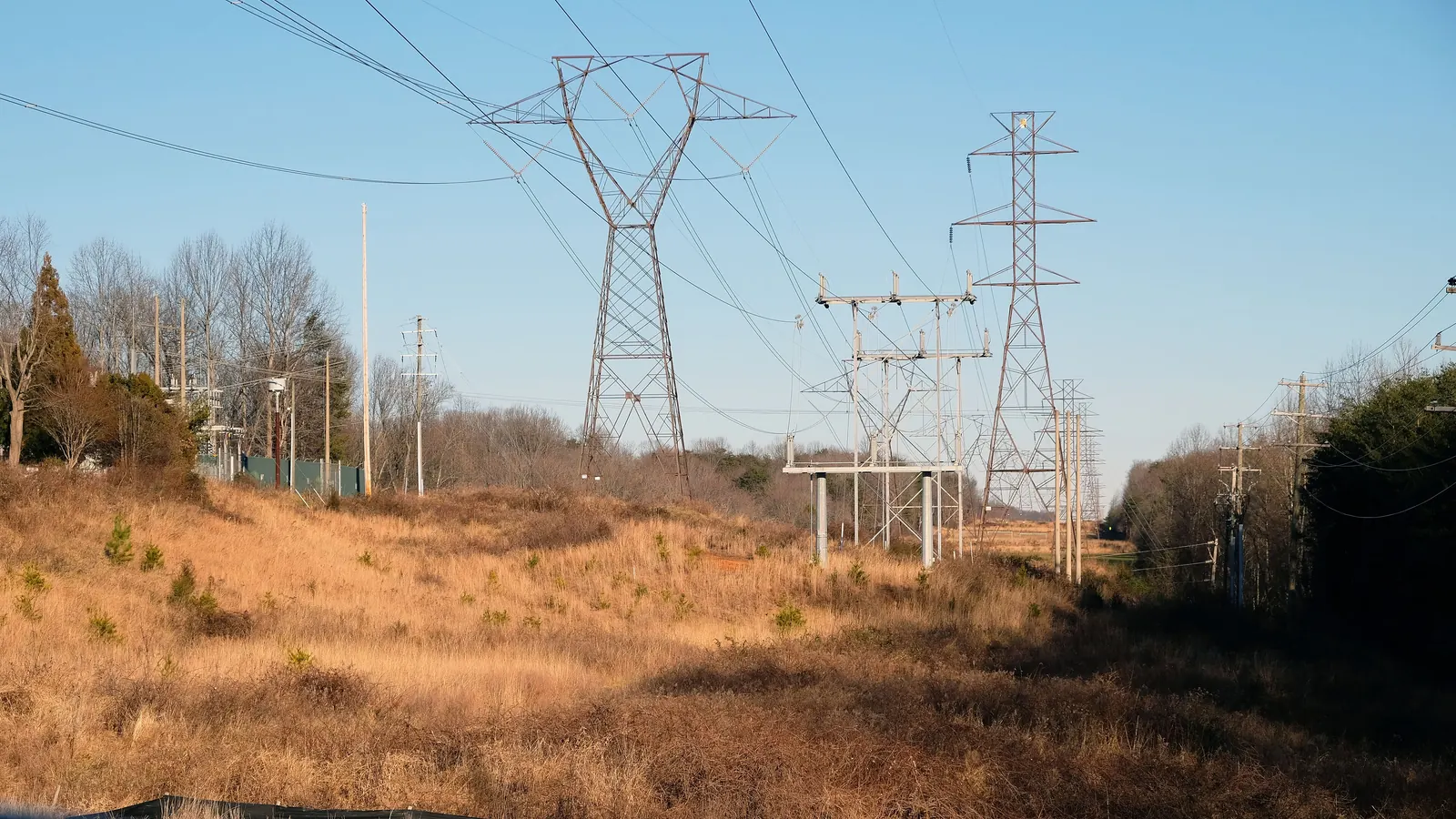
A cooperative broadband kickoff can freeze a GIS staking file on Monday and still treat those heights as field clearances by Wednesday. The poles are already the co-op's. The conductors are already the co-op's. What is missing is a measured record of those conductors and the attachers already hanging on them. The guys that keep the line standing have to be in that same file.
This guide stays on that field record. It does not walk fiber architecture or construction release. Those decisions belong in a later engineering package. Fielding here is owner-pole evidence, collected by our crews, not a joint-use application written against a pole the cooperative already owns under a federal attachment clock.
What OSP Fielding for Electric Cooperative Broadband Records
OSP fielding for electric cooperative broadband is the in-house collection of measured facts on co-op-owned poles before fiber design starts. Crews record IEEE C2-2023 conductor and communication-space clearances plus existing attacher inventory. Guy and anchor geometry and pole-loading inputs go in the same file. It is not a 47 U.S.C. 224 joint-use application.
The cooperative is the pole owner. That single fact changes the work. An overbuilder walks someone else's plant and has to prove a right to hang. A co-op walking its own feeders is recording the plant it already operates. The file that comes back has to name the co-op's conductors first. Existing attachers still matter. They occupy space. They do not convert the walk into a federal attachment clock.
What OSP Fielding for Electric Cooperative Broadband Leaves Out
We do not produce a NJUNS packet on a pole the cooperative already owns. We do not file 47 CFR 1.1411 against that owner. 47 U.S.C. 224(a)(1) excludes a person cooperatively organized from the federal definition of utility, so a federal survey clock copied onto a co-op feeder is the wrong instrument. Ownership of each pole still has to be confirmed, because mixed-entity spans sit on the same road.
Route design stays out of this package. Construction issue stays out of it too. They belong in electric cooperative fiber deployment engineering, which is where owner decisions survive into operations. Fielding stops at evidence. If a later designer inherits only a green overlay, the measurements never happened.
One thing I still catch in our own kickoff files is a staking extract treated as a measured mid-span. We used to let that extract travel into the working file because it looked finished. It was a desktop number. We now refuse to baseline communication space from a GIS height until a crew measures it.
Staking is not a field height. IEEE C2-2023 Rule 232 and Rule 238 use measured vertical clearance. A GIS attribute that reports 32 ft of conductor height is still a desktop number until a crew stands under the span and records a measured vertical clearance.
The product of the walk is a pole-by-pole file the cooperative can accept or send back. Each pole has to carry asset identity the owner already uses for outage work. Measured supply height has to be there. Communication-space occupancy has to be there. Guy and anchor notes have to be there if the pole is guyed. The PLA inputs a later loading run will consume have to be there. Missing one of those facts is a hold, not a yellow icon.
| Owner-pole fact | What the crew records | Code or bulletin it supports | Release state |
|---|---|---|---|
| Supply conductor height | Attachment height at the pole and a measured mid-span where the span can sag into the communication worker safety zone | IEEE C2-2023 Rule 232 and Rule 238; 7 CFR 1724.50 | Record or hold if estimated |
| Neutral or secondary height | Measured attachment and a note on whether the secondary occupies communication space | IEEE C2-2023 Rule 235 and Rule 238 | Record or flag for design |
| Communication-space occupancy | Whether the 40-inch zone under Rule 238E is empty or occupied, with a violation note if occupied inside the zone | IEEE C2-2023 Rule 238E | Screen or hold |
| Existing attacher identity | Company mark and attachment height, with a note that the mark is a clue rather than current owner of record | Owner inventory, not 47 CFR 1.1411 | Inventory or leave unnamed |
| Guy lead and anchor | Lead distance, approximate guy angle, anchor type, and visible condition | RUS Bulletin 1724E-153, April 25, 2001 | Record or flag deteriorated |
| Pole class, height, circumference, span | Class and length marks if readable. Groundline circumference and span to adjacent structures. | RUS Bulletin 1728F-700, April 18, 2022; later PLA | Record for loading, hold if unreadable |
The table is a preview of the walk, not a substitute for it. Each row is a fact the later designer will try to infer from GIS if we leave it blank. We would rather send an ugly hold than a clean overlay resting on an estimated mid-span.
Measure the Co-op's Own Conductors Against NESC and RUS
Start with the co-op's own supply. The fiber will hang below it. If the measured conductor is lower than the staking file claimed, the 40-inch communication worker safety zone moves with it on that span, and the later hang has to follow the measured height. That is the first number the walk has to defend.
IEEE C2-2023, the 2023 National Electrical Safety Code, published August 1, 2022 and effective February 1, 2023, is the edition we field to unless the cooperative has adopted another accepted edition in writing. 7 CFR 1724.50, on the September 11, 2026 eCFR display, requires every borrower electric system to be designed, constructed, operated, and maintained in accordance with the most current accepted NESC. RUS electrical standards sit beside that Code. They do not replace it.
Mid-span is the clearance GIS will lie about
Attachment height at the pole is the easy photograph. Mid-span is the number that actually collides with communication space on a long rural span. Rule 232 governs vertical clearance above the surface. Rule 238 governs the vertical relationship between supply and communications on the same structure, including the communication worker safety zone in Rule 238E. We measure both. A pole-top photo that never looks down the span is a screening note.
RUS Bulletin 1724E-154, Distribution Conductor Clearances and Span Limitations, dated July 30, 2003, is the Electric Program bulletin that still frames span limits on borrower distribution. The field file has to name that bulletin when the cooperative is an Electric Program borrower. Naming it is not the same as restaking the line. Fielding records the existing plant. Staking is a later construction language.
The RUS compliant engineering services guide is where those bulletins are scoped for design and contract form. This article only records the measurements they will consume. We will not write a 1728F assembly number onto a pole whose conductor height was estimated.
RUS Bulletin 1728F-804, Specifications and Drawings for 12.47/7.2 kV Line Construction, October 2005, remains listed at 7 CFR 1728.98(a)(23) on that same eCFR display. 1728F-803 covers 24.9/14.4 kV construction. Match the bulletin to the voltage on the pole. A 12.47/7.2 kV feeder does not borrow a 25 kV assembly as a field label.
Our crews collect the ground-truth heights in-house as OSP field survey, the same field function we run on owner-pole walks before any designer is allowed to trust a staking extract. Engineering stays in-house after the walk. The measured file is what the later designer is allowed to trust.
A secondary that has sagged into communication space is not a curiosity. It is a Rule 238 problem the fiber cannot occupy around. The crew photographs the sag and measures the height, then the pole stays on hold until operations says whether that secondary stays. Fielding does not relocate a co-op conductor.
Inventory Existing Attachers Without Building a Joint-Use Packet
Someone else's cable is already on a lot of co-op poles. That cable occupies communication space. It does not make the cooperative an applicant under 47 CFR 1.1411. The walk still has to name it, because a later fiber attachment will share the pole with it.
We treat the brand on the jacket as a clue. Brands outlive companies. A transferred CATV system can carry a dead mark for a decade while the current attacher sits under a different letterhead. The crew photographs the mark. The working file still has to say whether that identity was confirmed through the cooperative's own attachment records. An unconfirmed mark stays unlabeled as current owner.
- Company mark: the brand on the cable or tag, recorded as a clue rather than as the current owner of record.
- Attachment height: measured to the communication attachment, not copied from the last joint-use map.
- Occupation of the zone: whether anything sits inside the 40-inch communication worker safety zone under Rule 238E.
- Unused space remaining: the measured gap that later design will try to occupy on the co-op's own pole.
That inventory is owner evidence. It is not an application. We will not format it as a NJUNS submittal on a pole the cooperative owns. If a later reviewer wants a joint-use packet, that reviewer is answering a different question, usually about a pole the co-op does not own.
Do not file 1.1411 against yourself. 47 U.S.C. 224(a)(1) excludes a cooperatively organized person from the federal definition of utility. A copied 45-day survey clock on a co-op-owned feeder wastes the only calendar the broadband launch was counting on.
Mixed-owner spans are the exception that has to be split on the map. A county road can carry co-op poles and a short run of investor-owned poles in the same mile. We write the owner on each structure before anyone quotes a process date. The co-op-owned poles stay on the owner-inventory path. The foreign poles stay on whatever attachment process that owner actually runs. One imported clock cannot cover both.
Empty communication space is a screening observation. It is not a capacity result and it is not an invitation to skip loading. We photograph open space. We still collect the PLA inputs the next section names, because a later hang on a class-5 pole with a long guy lead is a loading problem even when the zone looks empty in the photo.
Collect Guy and Anchor Notes for Later Pole Loading
A guyed distribution pole is a loading problem waiting for numbers. Fiber on that pole will add wind area. If the field file never recorded the guy lead, the later PLA run is inventing geometry. We would rather measure the lead in the ditch than guess it from a 2005 assembly drawing.
RUS Bulletin 1724E-153, Electric Distribution Line Guys and Anchors, dated April 25, 2001, is still the Electric Program bulletin for that hardware. The crew records lead distance from the pole to the anchor and a usable guy angle. Visible insulator condition and whether the anchor head is buried or displaced go in the same note. That is field input. It is not a guy redesign.
PLA still has to run after the walk
RUS Bulletin 1728F-700, RUS Specification for Wood Poles, Stubs and Anchor Logs, April 18, 2022, is the current wood-pole specification listed at 7 CFR 1728.97 on the September 11, 2026 eCFR display. Class and length marks on the pole, when readable, go into the file. Groundline circumference goes in whether the mark is readable or not. Span to the adjacent structures goes in, because loading will need it. Unreadable marks stay labeled unreadable. We do not invent a class from a neighboring pole.
The pole loading math lives in NESC pole loading compliance for fiber attachments. We collect the inputs here. A photograph of open communication space is not a capacity result. Approved pole-loading work, when the cooperative buys that next step, is priced in the sanctioned $45 to $75 per pole band. Fielding does not include that calculation.
Groundline condition is a loading input and an operations fact. A pole with visible shell rot at the line is not a fiber problem first. It is a co-op plant problem the broadband project just found. The crew photographs the groundline and measures what can be taken without excavating. The pole stays on hold for the owner. Fielding does not condemn a pole. Operations does.
I would rather send a crew back for one span than let design hang fiber on an estimated guy lead. Rewalking a span costs an afternoon. A loading model built on a guessed lead costs a make-ready cycle. The limitation of our preferred field-first method is simple: photographs do not replace a PLA run, and we have over-trusted a sharp photo of open space before.
When the cooperative wants that owner-pole record collected in-house, the work sits in our electric utility engineering practice. Fielding is the first product. Design is a later product. We keep those packages separate so a later reviewer can see which facts were measured and which facts were still assumed.
Owner-Pole Fielding Release: Next Steps by Cooperative Type
Cooperative building member FTTH on its own poles: require a pole-by-pole file with asset identity and measured supply and communication heights before anyone draws an LLD hang. Existing attachers, guy and anchor notes, plus the PLA inputs, have to be present. Hold every pole whose mid-span was estimated. IEEE C2-2023 Rule 238E is a measured 40-inch zone, not a GIS color. Design does not start on an estimated height.
Cooperative with mixed-owner spans on the same feeder: split the map before the walk. Co-op-owned poles stay on the owner-inventory path. Foreign poles stay on that owner's actual attachment process. Do not file 47 CFR 1.1411 against a cooperatively organized owner that 224(a)(1) does not bind. Write the owner on each structure so a later scheduler cannot read one clock across two legal problems.
Cooperative that only has GIS staking and a member polygon: do not treat the staking extract as field clearance. Send our crews to measure the conductors first. RUS Bulletin 1728F-804 remains the October 2005 construction-drawing set for 12.47/7.2 kV plant, and 1724E-154 still frames span limits, but neither bulletin converts a desktop height into a Rule 232 measurement. The walk comes first.
Release is a responsible field file, not a complete survey of every asset in the county. The package has to show the measured poles. It also has to show the holds. If those statements are missing, we do not release and we send the map back. We attach the adopted NESC edition and the owner call on each mixed span, because a later designer who inherits only the overlay will assume both were settled.
Buy the owner-pole file before anyone draws a hang. Later loading has nothing honest to consume until our crews collect that package, and a construction calendar that skips this step is guessing the communication worker safety zone. Active in 24 states. Available across all 50 U.S. states. Engineering stays inside the firm. Fielding is in-house field work our crews collect.
Send the GIS staking extract and the owner pole list to info@draftech.com. Include the adopted NESC edition. We will flag every pole that still lacks a measured mid-span, because those are the ones that will move the fiber hang.
Walk the co-op's own conductors before the overlay turns into a hang. Ask the field survey team to review an owner-pole fielding file.
A cooperative that wants the owner-pole file tested on real plant can start with one feeder. We field and engineer the first 20,000 linear feet through permit approval without charge, and the measured file stays with the cooperative afterward. Holds on that feeder stay out of the hang set until a crew rewalks them.