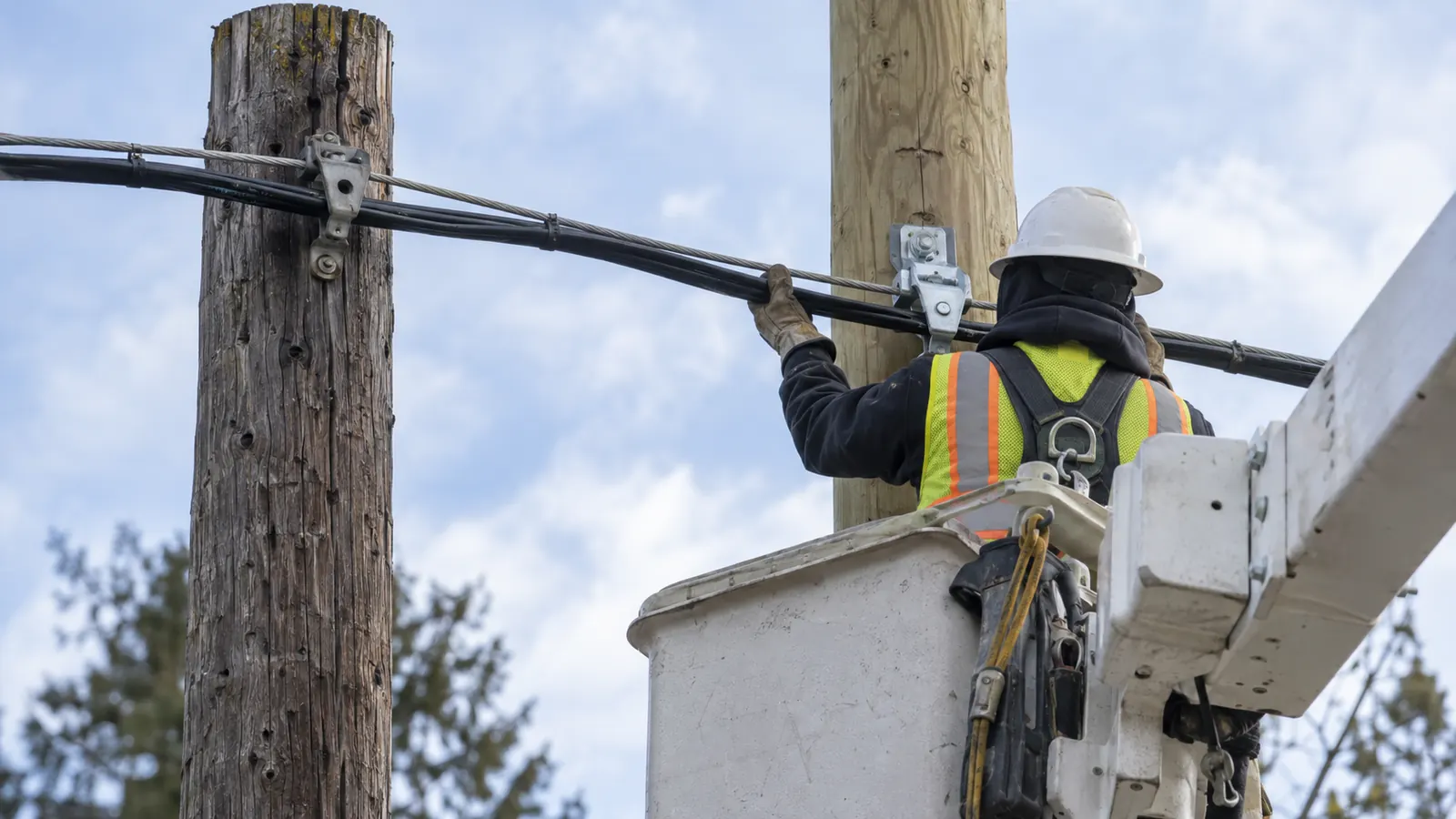
- What pole attachment transfers involve
- Sequence pole attachment transfers from power to communications
- Use NJUNS to make the next handoff clear
- Why double poles remain after replacement
- Engineering checks that shorten the transfer cycle
- Recommendations by reader: assign the next action before committing the route schedule
A replacement pole can carry energized distribution facilities while the old pole still supports communications cable. The electric work has advanced, but the replacement remains open. For a broadband project manager, that unfinished transfer can leave an approved route waiting on an attacher whose work was never included in the construction forecast.
We plan the replacement through removal of the old structure. That means connecting the engineering package to the transfer notices and giving each remaining attachment an accountable owner. This guide explains the usual sequence, how NJUNS supports the handoffs, and where engineering can prevent a return visit. Timelines vary by pole owner and agreement.
What pole attachment transfers involve
Pole attachment transfers move existing facilities from a replaced utility pole to its replacement. During the transition, 2 poles may stand beside each other until every attacher has moved its facilities or completed an authorized removal. Power generally moves first, followed by communications in the sequence established by the pole owner.
The replacement can result from deterioration or damage, or from a make-ready design that requires a different pole. Those starting conditions affect how much planning can happen before the new structure is set. We distinguish an emergency replacement from planned capacity work because service restoration may precede a complete communications inventory, leaving reconciliation work for the transfer coordinator afterward.
Account for every facility on the old pole
Each attacher remains responsible for its facilities under the applicable agreement, even where an authorized contractor performs the physical transfer. The company that installs the new pole does not automatically receive permission to move every cable on the old one. We identify ownership before assigning work so a construction schedule does not quietly assume authority that the contract never granted.
An attachment inventory must describe what is physically present. A database entry can identify an operator without capturing a service drop installed after the last survey. We compare the records with field observations and ask the owner to resolve uncertain ownership. An unidentified cable remains an open issue; an absent company name does not make the cable abandoned or available for removal.
We also separate the main cable transfer from work at the surrounding spans. Moving a support point changes the cable path, and the available slack may limit the move. The design needs to account for existing tension and the proposed attachment elevation. Where a splice is necessary, the attacher must plan that work and the associated service arrangements before dispatch.
Define the finish before setting the pole
Replacement completion has to include the old structure. We ask who will authorize its removal and who will receive the removal work order before the first transfer notice is issued. Otherwise, every attacher can finish its assigned move while the pole remains standing because nobody owns the final step. The closeout record should distinguish a completed cable transfer from a removed pole.
The work package also needs to show how the replacement fits the route. If an adjacent pole is scheduled for replacement, the communications design should consider both moves before committing cable length or a splice location. We want the crew to receive a usable construction package rather than discover that the next planned change invalidates the arrangement just installed.
Our pole replacement engineering scope addresses the replacement design that makes those transfers possible. For the transfer coordinator, the key deliverable is a clear relationship between the existing pole and the approved replacement configuration. A drawing that shows only the final electric arrangement leaves communications owners without enough information to prepare their portion of the work.
We settle cost responsibility separately from the physical sequence. The attachment agreement and the reason for replacement can affect who pays for a move, so the coordinator should record the accepted scope before using it in a budget. A disputed charge needs an owner to resolve it; leaving the dispute implicit can stall an otherwise buildable transfer without explaining why.
The construction package should identify any facilities intended for retirement rather than transfer. We require the responsible operator to confirm that disposition before treating it as cleared work. A cable that looks unused can still serve an active customer, and an inaccurate removal assumption can turn a planned pole replacement into a service interruption that the transfer schedule never contemplated.
Sequence pole attachment transfers from power to communications
The transfer order follows the facilities and the owner's procedure. Power work normally leads. Communications owners then move their facilities in the assigned sequence, commonly progressing downward through the communications attachments. We confirm that sequence with the pole owner instead of treating a photograph of the attachment stack as authorization to schedule a particular contractor.
| Work stage | Responsible party | Evidence needed for the handoff |
|---|---|---|
| Replacement readiness | Pole owner and authorized replacement contractor | New pole identified and required preparatory work accepted |
| Power transfer | Electric utility or its authorized contractor | Power work complete and communications release confirmed |
| Communications transfers | Each attacher or its authorized contractor | Assigned facilities transferred and the next party notified |
| Old-pole removal | Party designated by the pole owner | Remaining facilities cleared and removal authorized |
Replacement readiness
The new pole must be ready for the specific transfer shown in the approved design. We check that field identification agrees with the work package before anyone updates the ticket. A location pin beside two poles can put a crew at the right address without telling it which structure is the replacement. Photographs should make that distinction visible, especially where tags are missing or difficult to read.
Readiness includes access to the work. A replacement beside a road may require traffic control or a road-authority permit for a subsequent visit, even after the initial setting crew has departed. We identify those dependencies while planning the handoff. The next attacher needs to know whether it can mobilize under an existing arrangement or must obtain its own authorization.
Power transfer and release
The electric utility controls its energized facilities and the release of the work area under its procedures. Communications scheduling should use the owner's confirmation that the preceding work permits the next task. A new pole standing beside the old one establishes only that a pole has been set; it does not show that the electrical transfer or the required preparatory work is complete.
We keep electrical construction responsibility explicit. If the owner requires its own contractor for the power transfer, the project schedule must carry that dependency. Draftech's engineering package can support the handoff, but engineering completion alone cannot release energized work. A coordinator should record the responsible utility contact and obtain an actionable update when the field condition differs from the planned sequence.
Communications transfers
Each communications move has its own construction constraints. A cable with sufficient slack may transfer without the same outage planning as a cable that requires splicing. We ask the attacher to confirm the scope before reserving the work window. That answer affects dispatch and helps prevent a crew from arriving prepared for a simple move when the installed plant requires a different method.
For owners using NJUNS, completion must also reach the notification record. PPL Electric Utilities describes this handoff in its undated NJUNS Transfer Program webpage: completion of one utility's step prompts notification to the next utility attached below it. That is PPL's published workflow; we verify the receiving owner's procedure before applying the same sequence to another territory.
Use NJUNS to make the next handoff clear
NJUNS, the National Joint Utilities Notification System, provides a shared place for participating organizations to coordinate pole work. Its Training Link page identifies guidance for changing ticket ownership and step members. Those functions matter when the party receiving a notice differs from the party that can resolve the transfer. Correct assignment keeps follow-up directed at an organization with responsibility for the work.
Keep the transfer record tied to the field
A usable ticket points to a specific pole and a specific action. We reconcile the ticket's pole identifier with the drawing before relying on its status in the schedule. When field personnel report a mismatch, the coordinator should correct the source record and explain the correction to affected parties. Sending another reminder against the wrong pole identifier only repeats the original problem.
We prefer completion notes that describe what changed. A note saying that the attacher's facilities have moved to the replacement tells the next participant more than a generic update saying that a visit occurred. If some facilities remain, the record should explain which work is outstanding and who will resolve it. Partial completion must stay visible until the remaining scope is handled.
Application approval and transfer completion answer different questions. Our guide to the NJUNS pole attachment application process covers the application side. For a replacement already underway, we track the transfer task through the owner's required workflow rather than assume an approved attachment application proves the old pole is ready to pull. The field condition controls that decision.
Follow up on the constraint
An overdue handoff needs a reason that a project manager can act on. The attacher may be waiting for power work, or it may need to revise its own construction plan. We ask for the unresolved prerequisite and the responsible party before changing the route forecast. A broad status such as pending hides the distinction between a scheduling delay and work that cannot yet proceed.
NJUNS can improve visibility, but we still need someone to review the response. A limitation of our own coordination approach is that it becomes inefficient if it produces repeated reminders without checking whether the underlying design issue has changed. We use the shared record to preserve the explanation and escalate the actual obstacle. Sending more notices does little for a crew that still lacks an approved transfer arrangement.
Why double poles remain after replacement
Double poles, also called double wood, describe the old and replacement structures standing together during an unfinished replacement. The old pole can remain necessary while even 1 attachment still depends on it. From the road, the replacement may look nearly finished; from the remaining attacher's perspective, the support it needs is still on the old structure.
Separate transfer backlog from removal backlog
We divide open poles by the next physical task. A pole awaiting an attacher needs transfer coordination. A pole with all facilities cleared needs the designated removal party. Combining those conditions in one backlog makes it harder to allocate work, because a notification to a communications operator cannot dispatch a pole-removal crew that belongs to a different organization.
An old pole that appears empty still needs verification. Hardware or a guy connection may be serving a purpose that a distant photograph does not reveal. We request confirmation under the owner's removal procedure before treating the structure as clear. Where the remaining function is uncertain, the field question goes back to the appropriate owner rather than becoming an assumption in a closeout report.
Check the remaining support: Before requesting a pole pull, reconcile the old pole's remaining attachments with the removal authorization. A completed communications ticket can leave a separate support issue unresolved.
Make removal a scheduled task
The designated removal party needs a work order it can execute. We carry that task through the route schedule and ask for confirmation when removal is complete. If access has changed since the transfer, the removal visit may need another arrangement. The project should retain that dependency instead of marking the entire replacement complete when the last communications operator reports its move.
Timeline discussions belong at this level of detail. Timelines vary by pole owner and agreement, and the project forecast must reflect outstanding field constraints. A single duration copied across every pole obscures the work still required. Our discussion of pole-owner make-ready response time helps separate owner response expectations from the broader construction sequence that a replacement must finish.
Engineering checks that shorten the transfer cycle
Engineering reduces avoidable waiting when it answers construction questions before the next crew arrives. We start with the proposed attachment geometry and check whether the existing plant can reach it. The receiving pole's capacity must support the intended arrangement. A transfer that looks minor in plan view can change loading or clearances enough to require another engineering review.
Check the final arrangement before dispatch
The Pole Loading Calculator is a free screening pre-check of 1 tangent wood pole for NESC Rule 250B wind and ice load against its capacity by class and district. It is not a stamped pole loading analysis. We keep that screening role separate from the project-specific analysis and acceptance required for the replacement design.
Measured attachment heights must stay connected to the clearance review. We check the proposed configuration against applicable requirements and the owner's standards rather than copy heights from the old pole. Where the replacement shifts the support point, adjacent spans also need attention. An unresolved clearance conflict belongs in the engineering queue before the coordinator tells an attacher that its work is ready.
Issue revisions to the people doing the work
Field changes need a controlled return to the design team. We ask the person reporting a conflict to identify the affected pole and explain what prevents the approved move. The engineer can then evaluate a revision without reconstructing the problem from a vague delay note. Once accepted, that revision must reach the assigned attacher before the next dispatch.
Our make-ready engineering connects those design decisions to the work needed for attachment clearance. We keep a specific unresolved issue attached to its pole record until the answer is accepted. That approach can shorten the cycle by preventing dispatch against obsolete drawings, though it cannot guarantee another company's crew availability or eliminate the owner's approval requirements.
Closeout should preserve the installed arrangement for the next project. We reconcile the accepted field changes with the as-built record and retain the evidence required by the pole owner. The replacement identifier must remain traceable to the retired structure. Otherwise, a later attachment request can inherit the old configuration and force another survey to answer questions this project already resolved.
Recommendations by reader: assign the next action before committing the route schedule
Pole owners: Separate poles awaiting transfers from poles ready for removal, and assign the removal work explicitly. Use the attacher inventory to verify that every required participant has a task. A backlog report becomes useful when it tells your coordinator which organization must act and what evidence will allow the work to advance.
ISPs and communications attachers: Confirm your transfer scope before accepting a field date. Resolve cable reach and splice requirements with your construction team, and identify any outage dependency. Report completion through the owner's required system so the next attacher can proceed without waiting for someone to reconstruct the result from separate emails.
Route project managers: Build the forecast from the unresolved work at each pole. Do not count an installed replacement as a cleared construction dependency. Ask for the next responsible party and its prerequisite, then update the route schedule from that answer. This gives your customer a defensible explanation of the remaining work without inventing a completion deadline.
Draftech International provides turnkey telecom and power infrastructure, with engineering 100% in-house and full turnkey construction delivered by Draftech-managed subcontract crews. We connect replacement design to transfer coordination so mismatched records and unresolved field changes get an accountable resolution. Active in 24 states. Available across all 50 U.S. states. Discuss your transfer scope at info@draftech.com.
Discuss the remaining transfers on your route. Bring the pole inventory and the current transfer status so the discussion starts with the work still open.
If pole replacements are holding a qualifying route at the planning stage, consider Draftech's free design offer. Draftech engineers the first 20,000 linear feet at no cost, from feasibility and field survey through permit approval. The owner reviews each request before Draftech commits the package, so the initial conversation can establish whether the proposed route qualifies.