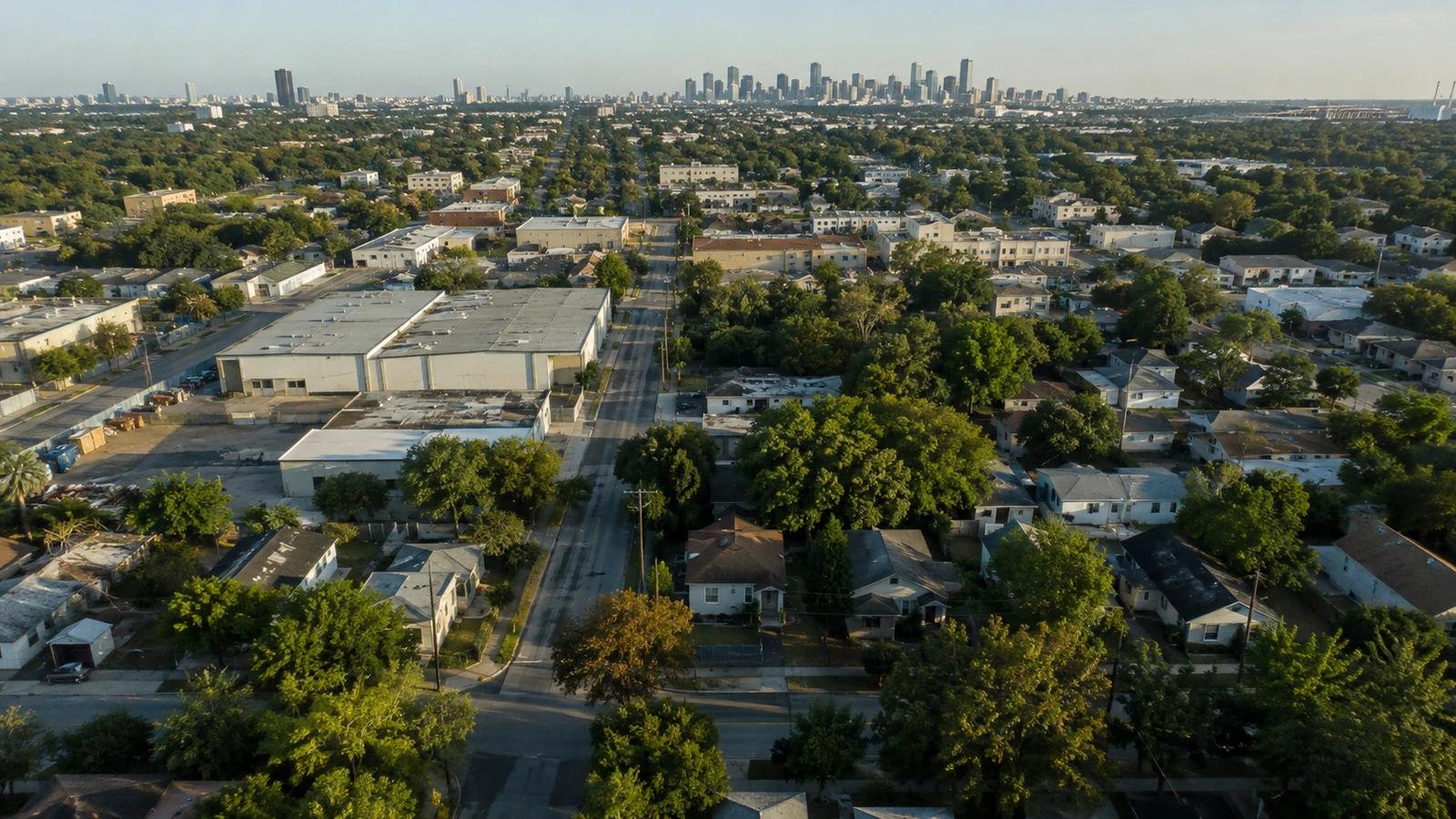
A short lateral can still leave a radio site dependent on the same corridor as its backup, or on a hub that lacks protected port capacity. Route mileage therefore belongs inside the service decision rather than ahead of it. Power, property access, and permit timing can each invalidate a path that looked inexpensive on the first map.
This guide starts with the service graph before civil alignment. It maps radio sites to transport roles and approved handoffs before testing the shared facilities that could interrupt service. Physical design follows while power and property constraints remain visible through commissioning. Route mileage becomes one input to the decision instead of the decision itself.
What Fiber Route Design for 5G Backhaul Must Resolve
Fiber route design for 5G backhaul connects each radio site to an approved aggregation or core interface through a controlled physical path. Test 4 linked records before release: site identity; logical service; fiber path and failure group; power and permit dependencies. Operations needs all four to commission and restore the service.
The radio team defines service interfaces and timing needs before setting target readiness. Transport engineering turns that basis into ports and paths, while OSP engineering proves the physical route. Power and siting teams close different dependencies at each node. One program can coordinate the work, but each discipline must approve its own release explicitly.
3GPP TS 38.104 covers base stations. Its radio-transmission and reception requirements depend on the applicable 5G NR base-station type and deployment. It is not a fiber route manual. We use the radio supplier’s and operator’s approved interface requirements rather than inventing one universal latency or bandwidth number for every 5G site in a program with different radio roles.
Draw the service graph before the civil alignment
The service graph gives every radio location an upstream aggregation role and logical service. It also records the protection relationship and timing source alongside the management path and traffic basis. Mark whether a site is a spur, chain member, or ring node because those positions carry different concentration risks. The map should make it obvious when one inexpensive cabinet has become a shared failure point for many sectors.
Not every small cell needs identical protection. The operator should classify service consequence by location and function; a capacity site may carry a different restoration target from a venue cluster or a corridor supporting critical communications. We do not invent those classes. Once the owner defines them, route decisions must preserve the corresponding path and power controls.
Use a Six-Release Backhaul Route Model
The table makes release ownership visible. Several rows can develop in parallel, but construction should not outrun unresolved fatal dependencies. This model is our project-control approach, not an ITU or 3GPP mandate. Owners may use different gate names while retaining separate evidence and authority.
| Release | Evidence | Main decision | Owner |
|---|---|---|---|
| Service basis | Site roles, interfaces, traffic basis, timing and protection needs | What transport service each radio location requires | Operator and radio/transport architecture |
| Hub and port plan | Aggregation sites, equipment space, port and power availability | Where services terminate and aggregate | Transport engineering and facilities |
| Candidate paths | GIS corridors, structures, ducts, crossings, failure groups | Which routes deserve field and property study | OSP engineering |
| Field and rights | Survey, ownership, permits, easements, utility records | Which alignment is buildable and controllable | OSP alignment governed by property rights and permitting |
| Issued design | Cable, splice, structures, construction details, restoration | How the accepted path will be installed | Engineering authority |
| Commissioned record | Tests, ports, timing, alarms, as-builts, accepted exceptions | Whether service and physical plant match the basis | Operator and operations |
Freeze the service basis by site role
A service basis names the handoff and capacity increment for each site class. The same record identifies timing architecture and management behavior. It also captures protection behavior over the approved forecast horizon. Aggregate demand should follow upstream relationships instead of multiplying one peak by a round site count. The operator’s traffic model controls. Our route plan records its result and revision so civil work does not depend on an undocumented spreadsheet state.
Timing needs equal attention. ITU-T Recommendation G.8275.1 describes a precision time protocol telecom profile for phase and time synchronization with full timing support from the network, including clock-selection and telecom boundary-clock provisions. The profile does not apply automatically to every backhaul route. The operator must specify the architecture first, and the assigned equipment roles establish fallback behavior.
Treat hub and port capacity as physical constraints
A hub needs suitable equipment space and environmental conditions. Power and grounding must support the planned load, upstream capacity must exist, and patching must resolve to an available port that operations can reach under the approved access procedure. A route shown as terminating at a building is incomplete until it reaches the accepted rack and port boundary. That distinction matters at one compound. The cell-tower fiber backhaul guide covers the entrance and carrier handoff, while multi-site programs add aggregation and shared-failure decisions across many endpoints.
Port planning should preserve stable identifiers from the service graph through the patch field and active equipment. Reserve capacity needs an owner and a termination state. Dark strands that are not landed or documented cannot be assumed available. We prefer a port and strand assignment table linked to cable and splice records, with planned and commissioned states kept separate.
Compare Candidate Paths by Failure Group
Screen route alternatives for control and consequence, not only length. First test constructability and property rights. Failure groups get an independent screen. The route comparison separately considers permit workload and shared structures as well as hub access and restoration scope. Cost range stays paired with schedule exposure. A longer route may remove a hard crossing or common duct. A short route can still win when diversity is not required and ownership is clear.
We map each bridge, tunnel, and shared duct bank as a possible common failure point. Aerial pole runs and major crossings receive the same treatment. Paths can reunite at the destination. Building entrances and cabinets may feed the same hub or commercial power source despite separation shown on a route map. Two colored lines are not diverse when one excavation or upstream facility can interrupt both. We therefore test the complete protection path before accepting the diversity claim.
Specify the fiber medium and tests from the interface
ITU-T Recommendation G.652 covers characteristics of single-mode optical fibre and cable, including categories and transmission attributes. Selection still depends on the operator’s approved optics, link budget, cable environment and splicing method. The connector plan must follow approved supplier specifications. Naming G.652 alone does not establish strand count or loss budget, and it does not waive project-specific acceptance testing.
The route design should calculate the optical path from actual cable lengths and documented splice or connector events, with owner-defined engineering allowances applied separately before commissioning begins. Commissioning compares measured results with the accepted budget and test plan. We avoid publishing one generic pass number because wavelengths and valid thresholds depend on the link configuration and test instrument under the owner criteria.
Choose aerial and underground by corridor condition
Aerial construction can use an existing corridor after ownership, pole capacity, attachment position and make-ready are resolved under the applicable access and permitting process. Underground segments avoid some overhead hazards but encounter subsurface congestion and require handholes suited to drainage conditions. Restoration scope must reflect the excavation risk. Compare media by segment. Forcing one construction method across the full corridor can preserve its worst constraint instead of solving the actual route problem.
Our model has a limitation. Service-graph work can spend architecture effort on sites that later fail property or power review. Fatal-flaw checks run in parallel. We remove locations without a credible host or buildable route path when power is also unavailable, before advancing civil detail. Architecture should prevent civil rework, not delay obvious site elimination.
Diversity test: trace both services through every splice point, structure, crossing and entrance through the hub’s power dependency. Stop calling them diverse at the first common failure group.
Prove the Route in the Field and in the Rights Record
Desktop GIS identifies candidate corridors but does not prove ownership, usable duct or pole identity, nor does it establish field clearance or access rights. Easements must support the proposed installation and expected restoration. The survey assigns stable IDs to structures and crossings, records route transitions, and locates candidate handholes or building entries. Each conflict receives a safe-access decision; every unknown condition receives a named investigation action.
Rights research runs beside survey. Parcel lines do not prove a usable easement, and a visible pole does not prove attachment authority. Public-right-of-way review may include federal small-wireless facility timing rules under 47 CFR 1.6003, but applicability depends on the facility and jurisdiction. Every permit and agreement follows its controlling process rather than a generic national schedule.
Coordinate the site and route as one dependency set
A route cannot be final when the pole or cabinet position is moving. The small-cell 5G backhaul engineering guide explains how the transport path depends on power at each site interface. We assign one site ID across RF, transport, OSP, power, property, and construction records so a location change triggers every affected discipline.
The route schedule should show the site release beside make-ready and permit decisions. Material commitments, construction windows, hub readiness, splicing, and testing need their own dependencies before active-equipment integration. More parallel activity is not always faster. Starting a lateral before its node has accepted power and host authority can create a stranded fiber tail with no defensible service date. A useful schedule keeps that lateral on hold until both releases exist, protecting crews from building toward an endpoint that cannot enter service.
Issue a Buildable Path and Preserve Field Changes
The issued package identifies the selected cable and every supporting structure. Splice locations and slack intent must agree with the handhole and attachment details as well as the conduit and crossing design through the entrance. Restoration and traffic controls follow the applicable permits, while the material schedule aligns with the approved test requirements. Route geometry connects to the service and strand plan. Construction notes must not conceal an unresolved engineering decision behind a verify label.
Draftech performs wireless and OSP engineering in-house. When construction is included, Draftech provides full turnkey delivery through Draftech-managed subcontract crews under our QA/QC and safety program. The installing team can propose methods and report field conditions, while technical changes return to the designated engineering authority before they become accepted records for operations use.
Control field changes at the site-path relationship
A moved handhole or alternate pole can change cable length and splice allocation while also changing the permit basis or a claimed diverse path. Nearby power facilities may also alter restoration scope and timing. The change request identifies the affected service and failure group rather than showing only a drawing mark. Approved redlines retain a source and date under the named decision owner. A convenience change without approval stays out of the as-built baseline.
The wireless tower fiber route design workflow explains single-site field and right-of-way controls. A multi-node backhaul program should apply the same rigor at every lateral while also checking shared trunks and hubs. Local acceptance cannot hide a backbone inconsistency.
Separate construction production from technical release
Construction progress can be measured through installed structures and placed cable, while completed splices and restored areas carry separate quantities. Technical release follows a different test: changes require acceptance; test results must pass. The records must also match the installed route. We report both states because a physically complete route can remain technically open while an issued design remains unbuilt. Combining them creates optimistic dashboards and weak operations handoffs.
Change rule: any field move must update the service ID, physical path, affected failure group and rights basis. Splice or port relationships must reconcile before closeout.
Commission the Service Graph, Not Only the Fiber
Fiber tests verify the physical path under the approved method. Commissioning must also prove logical service and port mapping before exercising timing behavior and alarms, followed by a check of management reachability. Protection or restoration operation must satisfy the operator’s radio handoff criteria. The equipment and network design define the exact test suite, which is why a clean optical trace alone does not prove end-to-end 5G service at the radio handoff.
Closeout records connect each site to its hub and active port. From there, the record traces the assigned fiber pair or strand through the splice chain through the cable and supporting structures. Test files carry the same identifiers. Timing source, power dependency, equipment configuration, alarms, and accepted exceptions remain linked without exposing the data beyond authorized operations staff. An alarm should lead to physical plant through a repeatable trace, not private installer knowledge.
Define the trigger for the next route decision
Capacity planning needs measurable triggers tied to the operator’s forecast and equipment roadmap. The baseline shows usable ports and strands against hub limits for each site class, with common failure groups kept visible. When a trigger is crossed, planners can evaluate another service or path without reconstructing the original assumptions. We do not claim that spare fibers alone make a route future-proof.
Operations changes should preserve the same identity chain. A new radio unit, port migration, or route repair can alter both logical and physical relationships. Update the graph with the as-built record and rerun the affected acceptance checks. That discipline keeps the network understandable after launch instead of leaving operations with a frozen commissioning snapshot.
Choose the First Backhaul Release
Transport owner with a fixed first-wave site list: release only after the host authority controls the property path. The release record must also show a resolved power dependency and assigned aggregation port. An inexpensive lateral stays outside the construction package when one fatal dependency remains open.
Program lead with sites still moving: spend the early effort on field evidence and property rights, because that work can eliminate weak candidates before the shared trunk is locked. Stable site IDs let the hub plan change sequence without losing concentration risk or stranding completed route work.
The delivery-partner test is one complete trace from radio handoff through the physical path to the commissioned record. Draftech’s in-house wireless and small-cell engineering coordinates radio-site dependencies with OSP transport, and our engineering model keeps technical release authority visible. Geographic availability is separate from project fit: Active in 22 states. Available across all 50 U.S. states.
Give the first release one accepted change and try to replay it from the site record to the commissioned service. A broken identity chain at that scale is cheaper to repair than after dozens of radios are in flight. To examine the same trace in a proposed fiber route design for 5G backhaul, email our wireless transport engineering team.