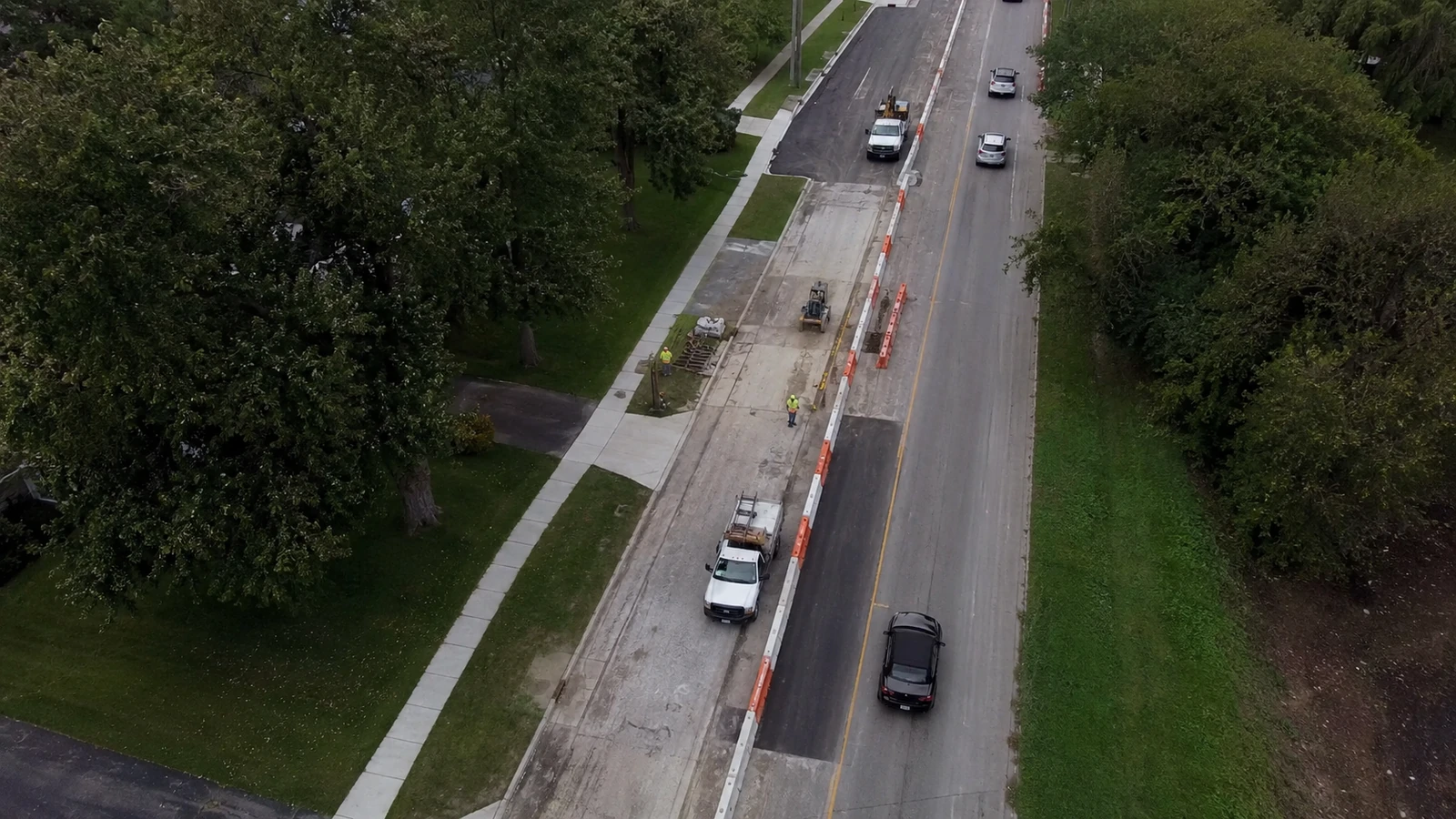
A permit bond carries financial security into a specific right-of-way authorization. Its obligation follows the work the authority approved and the restoration promised in that record. The permit sets that boundary. If performance fails, the accepted instrument gives the authority a remedy. The local permit terms determine when that security begins and what evidence ends it.
Interfaces drive the risk. Fiber schedules encounter bond trouble where one record hands responsibility to another. The legal party shown on the permit may not match the proposed principal, or an estimate may still reference a superseded drawing revision before anyone requests final execution from the surety. Capacity can also remain committed long after demobilization when the release record is incomplete. This guide traces those interfaces so the owner can resolve them before issuance or closeout stalls.
What permit bonds usually cover
Permit bond requirements for fiber construction connect one accepted security instrument to the work authorized by 1 permit record. The obligation usually follows completion through restoration and remains active until the authority accepts the stated release evidence. Its current form defines the amount basis as well as the closeout mechanism.
The permit file may place several instruments in one folder even though they do different jobs and expire on different events. The permit supplies conditional access, while the bond secures the performance stated in that authorization. Insurance and indemnity documents answer separate liability questions, and a restoration warranty may continue after field work ends. Read enforcement and expiration from the instrument that creates the duty rather than treating the folder as one obligation.
The Caltrans Utility Encroachments Permit Application Guide describes an encroachment permit as permissive written authority to enter state highway right of way and states that it creates no property right. Access begins with the permit. That places authorization ahead of security in the control sequence. The bond supports performance within the approved package. Entry into the corridor still depends on the permit and remains subject to its conditions.
Under 23 CFR 645.213, use and occupancy agreements must include or incorporate requirements governing the utility's location and construction. Traffic protection falls within that scope. Maintenance duties and access restrictions do too, together with any special conditions in the agreement. The section also calls for drawings locating the utility relative to highway features. We use those approved limits for the bond estimate because quantities from a wider planning corridor can include work the authorization never allowed and inflate the capacity assigned to it.
Build a bond trigger register before procurement
We identify the jurisdiction first. The segment then enters our trigger register with the permit type and approved applicant. Separate fields hold facility ownership and contractor responsibility, with the proposed bond parties carried as an unresolved decision. We then ask the authority whether a project-specific instrument is required or a blanket bond will be accepted. Procurement receives that answer only when it is written; a practice used in another jurisdiction does not close the field.
Bond exposure follows approved work limits more closely than route mileage, as two adjacent segments can demonstrate. An aerial attachment may disturb almost no surface, while a directional bore introduces pits and restoration at each end; a trench through concrete sidewalk changes the replacement area again. Our fiber network permitting consultants workflow assigns every segment to its jurisdiction before an estimate reaches the surety. We trace the secured work to a permit condition or drawing sheet and record any missing connection as an exception.
Read the bond against the permit record
Review starts where the bond meets the permit. Start with the secured work. We trace the secured work to approved limits, then compare the applicant with the principal named in the instrument. The estimate must reproduce quantities accepted by the authority, and the term language must cover the period those quantities remain exposed through construction and any stated warranty period. Release is read from the obligee's requirements at the end of that chain. An internal completion code has no authority to shorten it.
The City of Seattle's Applicant Guide 1020, Surety Bonds shows how the handoff works. Seattle reviews the estimate first. It describes the bond as a guarantee that permitted work will meet city standards and explains that the city can use it to complete or repair work when the permittee does not. The applicant prepares a cost estimate for review before using the city's form. A digital copy is screened first, followed by delivery of the original instrument.
| Control point | Evidence to collect | Release risk |
|---|---|---|
| Scope identity | Permit limits read against the restoration sheets and the special provisions | Unsecured work or an inflated estimate |
| Party identity | Exact principal and obligee names matched to the surety and the authorized signer | Rejected form or a disputed obligation |
| Amount basis | Accepted quantities with stated unit assumptions and a written contingency rule | Underbonding or avoidable carrying cost |
| Term | Effective date plus continuation language and cancellation notice | Coverage gap during construction |
| Closeout | Final inspection and punch list closed against record drawings and a release request | Bond left open after completion |
Confirm the exact party names and signature authority
Party identity deserves a line-by-line check because names are exact data. Seattle AG 1020 requires the name in the bond body to remain identical in the signature block. When Washington registration applies, the guide directs the applicant to use the principal name registered with the Secretary of State. Entity type changes the execution rule. The guide treats corporations and partnerships differently from joint ventures or limited liability companies. We circulate the current form early so the permittee's counsel and surety representative can resolve signer authority before submission.
Draftech performs engineering in-house. Full turnkey construction is delivered by Draftech-managed subcontract crews under our QA/QC and safety program. The authority still assigns the principal. Even so, the jurisdiction may place the principal obligation on the applicant or facility owner, and its written direction may identify another responsible party for a particular permit. We keep that field open while the authority and the responsible legal team confirm the correct legal name in writing.
Match the amount and instrument to the permit’s real exposure
The bond amount should be reproducible from the exposure created by the authorized work. The drawing revision is essential. On an excavated segment, the worksheet may begin with installed quantities and the cost to restore the disturbed surface. Pavement replacement can dominate another estimate. An accepted traffic-control plan may also change the cost of completing the work. We preserve the agency worksheet beside the exact plan revision used for quantities, including the authority's stated contingency rule, so any later design change can be evaluated against the accepted basis.
Our underground fiber permit submission review keeps estimate quantities synchronized with the plan set. A moved bore can relocate its pits. It can also change the pavement restoration, and revised traffic-control staging may leave the accepted amount out of step with the authorized work. A revision received after estimate acceptance reopens the bond decision, and it stays open until the authority states whether the instrument or amount needs amendment for the revised package.
Accepted security varies by authority, so procurement starts from the current agency form instead of a preferred instrument. One agency may require a surety bond, while another permits cash security or a letter of credit; qualified permittees may also operate under a continuing bond whose capacity is shared across permits. Our engineering role is to identify the accepted instrument and keep its scope aligned with the drawings. The owner selects it with advice from the surety and qualified legal counsel.
The working file should pair the accepted estimate with its assumptions and revision date, then use the current authority-issued bond form rather than a copy from an earlier program. When one instrument supports several permits, finance also needs a live view of committed and released capacity. Calendar any cancellation or renewal notice early enough to cover construction and the warranty period stated by the authority.
Public review and surety underwriting run on separate schedules, and their sequence often controls the issuance date. The underwriter needs the accepted estimate and final form language before evaluating the obligation or an indemnity request against the permit. We assign that exchange to the party dealing with the surety and expose its dependencies on the permit schedule. A single activity labeled “bond” conceals the handoff most likely to become critical near issuance.
Do not let the bond mask an incomplete design package
Bond acceptance leaves the design review exactly where it was. Security supplies no missing geometry. Inspectors still need drawings that resolve utility conflicts and describe the construction method at field scale. The common causes of fiber permit rejection therefore remain active after security is arranged. We begin the bond-readiness check only when the drawings and permit conditions point to recognizable work, with estimate quantities derived from that same scope for the inspector's field use.
Self-critical note: Our register can overstate certainty when the supporting record is weak. A “received” status says only that a file arrived; it does not prove that the principal is correct or the form is current. Each readiness field needs its own evidence, and questions of legal interpretation return to qualified counsel before the dashboard changes status.
Control the bond from permit application through release
Before mobilization, we confirm that the authority issued the permit and accepted every required original. The contractor receives the approved plan set with its permit conditions, including the pages that control access and work hours. The Caltrans guide frames the encroachment-permit process around safety for the traveling public. It extends that concern to highway workers and permittees. The bond does not replace those traffic-protection requirements.
Construction creates the release record one shift at a time. Daily location records remain attached to the permit alongside inspection correspondence, giving the reviewer a continuous history of the installed facility and each disturbed public asset. Our fiber construction right-of-way compliance checklist separates installation evidence from restoration evidence because an authority may accept them through different inspections. That separation keeps the closeout reviewer from reconstructing field history after demobilization.
When field conditions change the proposed work, the construction lead records the deviation against the current sheet before anyone assumes the permit still covers it. The authority makes the coverage decision. It states whether the existing record accommodates the change or whether a revised sheet and formal amendment are required. Its written answer returns to the bond register. This keeps an informal direction in the field from silently expanding the secured scope.
Define release evidence before the first excavation
Release planning belongs upstream. We ask the authority about release while the permit is still under review. Final inspection may occur before record drawings are accepted, and the restoration record can be a prerequisite to punch-list closure. A warranty period may carry the obligation beyond demobilization. Where an inspection request has a defined window, we place that trigger on the baseline schedule and assign an owner before excavation begins under the authority's published procedure. The project then knows which event starts the release request and can schedule the supporting evidence without treating crew demobilization as equivalent to the authority's written release.
Written release controls capacity. Capacity returns when the obligee provides the evidence required by the instrument or follows its stated release mechanism. A contractor's completion notice records a field milestone, while an internal close code updates the program ledger. Finance leaves the amount committed until the authority's written release arrives. That discipline matters when one continuing instrument supports several open permits, because an early ledger close can overstate the capacity available for the next application submitted in the same jurisdiction.
Choose bond controls that can survive a drawing revision
A procurement scope should give one accountable person custody of the bond record from estimate acceptance through release. That person obtains the current form and reconciles the amount to the approved sheets. A sheet revision reopens the decision. It then routes the question to the party with authority to answer. Legal and financial judgments remain with the owner and qualified advisers; the engineering record shows them exactly when a ruling is needed.
Make the permit-centered register the primary control record. Each row points to the drawing revision that defines secured work and to the authority's required closeout evidence. The estimate workbook is attached by revision so another reviewer can reproduce the quantities without interpreting filenames. With that trace in place, the team can see which evidence supports readiness and which decision is still waiting for an owner at the current drawing revision.
At final review, the network owner's decision concerns the legal identity of the proposed principal and the written path to release. The engineering record presents those unresolved items without deciding them. In the same meeting, the permit lead's check returns to the quantity basis whenever design review moves a pit or changes restoration limits. That check prevents an accepted estimate from following a superseded package into construction.
Our in-house engineering team prepares the plan crosswalk and maintains the document controls. When the project proceeds into full turnkey construction, the Draftech-managed crew model keeps field changes inside our QA/QC and safety program. Construction personnel do not inherit legal approval through that workflow. The permit record carries each authority decision into closeout while engineering responsibility and surety authority remain distinct.
Current route sheets and a jurisdiction list give us enough context to start. Ask our permitting team to mark the unresolved bond decisions on that record; when the documents require secure intake, email Draftech so we can identify the engineering evidence available before counsel or the surety acts and before the owner commits funds to the instrument.