54 states and territories have BEAD Final Proposals approved. Engineering capacity is becoming the bottleneck. Draftech delivers end-to-end OSP engineering support — so your broadband build moves from funding to construction without getting stuck in the design phase.
BEAD is moving fast. All 56 states and territories have submitted Final Proposals — 54 have NTIA approval. Broadband teams that lock in engineering partners now move first. Request a free readiness review →
Most BEAD delays don't start in construction. They start weeks or months earlier — in field data, permitting, design quality, and documentation. Here are the 7 bottlenecks we see on every project.
Incorrect pole IDs, approximate GPS coordinates, and missing attachment data force redesigns after construction packages are already drafted. One bad field pass costs 3–6 weeks.
ROW permits, railroad crossings, and municipal approvals take longer than most project timelines budget. Starting the permit process late is the single most common schedule risk.
Pole loading analysis that misses clearance violations or overloaded attachments sends make-ready back to square one — and freezes construction readiness for the entire route segment.
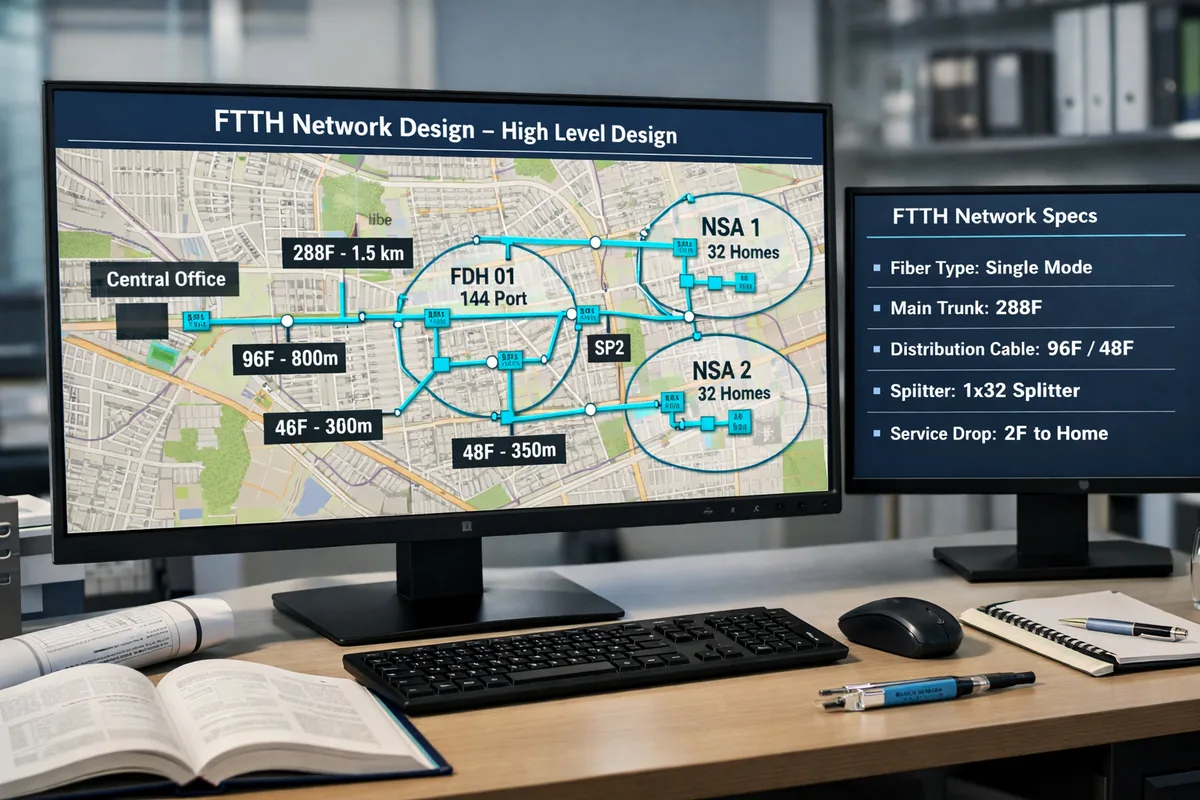
High-level designs that don't account for field conditions produce low-level drawings that fail constructability review. The redesign cycle adds budget and schedule risk before a shovel goes in the ground.
Plan sets with wrong pole IDs, missing detail sheets, and mismatched geometry fail permit review on the first submission. Every resubmission costs fees, time, and crew standdown days.
When survey, design, permitting, and as-builts are split across multiple vendors, handoff errors compound at every transition. Data loss between teams is one of the most preventable sources of project delay.
BEAD grant reimbursement and closeout require GIS-accurate as-built documentation. Projects that don't track construction changes in real time face costly rework at closeout and delayed grant payments.
One partner across every phase of your BEAD build. No handoffs between vendors. No data lost between teams. No schedule risk from coordination gaps.
GPS-accurate pole surveys, attachment data collection, span measurements, and condition assessments. Coordinate accuracy within 0.5 meters. Structured GIS-ready output from day one.
Network architecture from splice points to drop terminals. Route planning, fiber count sizing, optical budget analysis, and BEAD-compliant service area coverage documentation.
Construction-ready plan sets at 1"=50' or 1"=100'. Pole attachment details, span annotations, bore crossing details, equipment pad layouts, and complete splice enclosure documentation.
ROW permit applications, railroad crossing submissions, municipal approvals, and utility coordination. We manage the permitting workflow so engineering bottlenecks don't become construction delays.
O-Calc Pro and SPIDAcalc analysis for NESC compliance. Make-ready scope identification, cost estimation, and coordination with pole owners to clear attachment space before crews arrive.
AutoCAD and Civil 3D plan sets. GIS deliverables in Esri-compatible formats as standard output — not an add-on. Coordinate accuracy to 0.3 meters. Structured layer schema ready for permitting and BEAD reporting.
Construction redlines captured during build. GIS-accurate as-built packages updated within 30 days of completion. NTIA-compliant closeout documentation that supports grant reimbursement and audit review.
Every engagement follows the same structured workflow — from free readiness review to final closeout package.
Scope assessment, bottleneck identification, timeline discussion
GPS-accurate data collection, pole inventory, attachment verification
Network architecture, route planning, optical budget analysis
ROW applications, railroad crossings, utility coordination
Construction plan sets, make-ready, GIS deliverables
Redline capture, GIS-accurate records, BEAD closeout package
Every OSP engineering firm says they can handle BEAD work. Here is what makes Draftech different.
Certified Minority Business Enterprise. A real advantage for BEAD subgrantees prioritizing MBE and disadvantaged business participation in broadband deployment.
Draftech has deployed engineering teams across 22 states and is available to mobilize across all 50 U.S. states. Your BEAD project location is not a limitation.
Not a startup. Draftech has designed more than 44,000 miles of fiber network and served 2.6 million+ addresses. That scale of experience translates directly into fewer surprises on your project.
Survey, design, permitting, make-ready, CAD/GIS, and as-builts under one firm. No data lost between vendors. No schedule risk from coordination gaps between disconnected teams.
Draftech has the engineering capacity to support large-scale BEAD deployments without adding schedule risk. We can scale to your project timeline, not the other way around.
Every deliverable is structured for NTIA grant closeout from day one — GIS accuracy standards, attribute documentation, and as-built completeness baked into the process, not added at the end.
Draftech is active in 22 states today and available to deploy across all 50 U.S. states. Find your state's BEAD engineering support page below.
Draftech provides end-to-end OSP engineering for BEAD-funded broadband deployments including field survey and data collection, FTTH HLD and LLD design, permitting support, make-ready coordination, pole loading analysis, CAD and GIS documentation, and as-built closeout packages that meet NTIA grant requirements.
Yes. Draftech International is a certified Minority Business Enterprise (MBE). This is significant for BEAD subgrantees because the BEAD program encourages the use of MBE and disadvantaged business enterprises in broadband deployment work.
Draftech is active in 22 states and available to deploy engineering support across all 50 U.S. states. The firm has supported broadband and telecom projects across the Southeast, Gulf, Midwest, and Mid-Atlantic regions.
Mobilization timelines depend on project scope and current capacity. Contact Draftech at info@draftech.com or 305-306-7407 to request a free BEAD design readiness review and discuss your specific timeline needs.
A no-cost consultation where Draftech engineers assess your project scope, identify engineering bottlenecks, review constructability risks, and recommend a support plan. It takes 30–45 minutes and covers field data quality, design approach, permitting risk, and documentation requirements for BEAD closeout.
BEAD grant closeout requires detailed as-built documentation including GIS-accurate network records, construction completion verification, and compliance with NTIA reporting standards. Poor documentation during design and construction phases often results in costly rework, delayed reimbursements, and compliance issues at closeout.
Talk to a Draftech engineer about your project. We will assess your scope, identify the engineering bottlenecks in your current plan, and tell you exactly what needs to happen before construction can start on time.
Request Free Review — No Commitment